
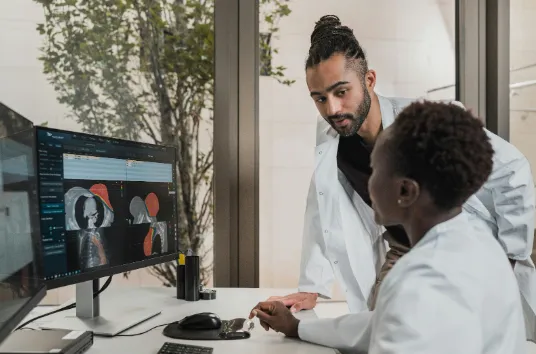
The integration of artificial intelligence in healthcare is not just a futuristic concept but a current reality that’s reshaping patient care. AI technologies like ChatGPT offer an unprecedented opportunity for medical professionals to enhance their services. From improved diagnosis to personalized care plans, AI tools are becoming indispensable in modern medicine. In this article, we’ll explore the diverse applications of ChatGPT in medical practice and how doctors are leveraging this technology to improve patient outcomes. Keep reading to see the transformative potential of AI in healthcare.
ChatGPT: Revolutionizing Doctor-Patient Interactions

ChatGPT is revolutionizing healthcare by enhancing how doctors and patients communicate. Trained on vast medical data, it can interpret patient questions, assess symptoms, and provide reliable health information in real time. By automating initial screenings, ChatGPT for doctors helps prioritize urgent cases, saving time and allowing clinicians to focus on more complex medical needs.
Beyond clinical use, ChatGPT strengthens patient education by explaining conditions and treatments in clear, conversational language. Its growing multilingual support also breaks down communication barriers, making healthcare more accessible and inclusive for patients worldwide.
Understanding AI’s Role in Modern Healthcare
Artificial intelligence is transforming healthcare by enhancing diagnostics, treatment planning, and patient care through rapid data processing and analysis. Its ability to identify patterns within massive datasets enables healthcare professionals to make better-informed decisions and predict disease progression or treatment outcomes. Doctors use AI to stay current with evolving medical research and guidelines, streamlining access to critical information.
Beyond analytics, AI-driven tools like chatbots support patient engagement by managing inquiries, scheduling, and care guidance. These technologies extend healthcare services beyond clinical settings, fostering continuous monitoring and personalized care while improving efficiency and effectiveness in medical practice.
Optimizing Diagnostic Accuracy with AI Assistance
AI is transforming healthcare by enhancing diagnostic accuracy through advanced tools like ChatGPT. It cross-references symptoms with potential conditions and integrates the latest medical research to aid in identifying rare or complex diseases. Continuously updated algorithms ensure doctors have access to current medical insights, improving the accuracy of differential diagnoses.
ChatGPT also analyzes patient conversations to uncover subtle indicators of underlying issues, supporting more precise testing and treatment decisions. By integrating AI into the diagnostic process, physicians can reduce human error, detect diseases earlier, and refine care strategies with greater confidence and efficiency.
Personalizing Patient Care Through Machine Learning Insights

Machine learning enables personalized healthcare by analyzing patient data to tailor treatment plans based on previous successful outcomes. ChatGPT, powered by these algorithms, helps create customized regimens that consider each patient’s genetics, lifestyle, and disease progression.
This individualized care improves treatment compliance, minimizes side effects, and enhances patient satisfaction, particularly for chronic conditions requiring long-term management. AI also supports real-time monitoring and prediction of patient responses, allowing doctors to adjust therapies proactively. As it processes more data over time, its insights grow sharper, enabling more accurate and adaptive recommendations that continuously refine the quality of personalized care.
Streamlining Administrative Tasks to Focus on Patient Health
ChatGPT is transforming healthcare by reducing administrative burdens and streamlining operations. It automates routine tasks such as appointment scheduling, insurance verification, and prescription refills, allowing healthcare providers to focus more on patient care. The technology also enhances documentation efficiency by generating accurate medical notes, discharge summaries, and referral letters, minimizing errors and improving record-keeping.
Acting as a virtual team member, ChatGPT provides continuous support through 24/7 availability, ensuring timely responses to patient inquiries and fewer disruptions for physicians. In public health, it aids in monitoring disease patterns and managing patient populations, helping healthcare systems allocate resources effectively and enhance service delivery.
Altogether, the integration of AI tools like ChatGPT into medical practice signifies a new era of healthcare, one where data-driven decisions and personalized care become the norm. These technological advancements are not only optimizing clinical workflows but are also enhancing the patient experience, promising a future of healthcare that is both efficient and compassionate.
